

Auto Repair Hub
Request a quote or learn more about the type of repair services Clair & Dee’s can offer you
The Services We Offer
At Clair & Dee's Point S Tire & Auto, all repairs and maintenance are carried out by highly qualified and ASE certified mechanics using quality equipment to service a wide range of vehicles, including cars, trucks, SUVs, and mini-vans. Our team is committed to ensuring your vehicle performs at its best before leaving our shop.
Tire Services
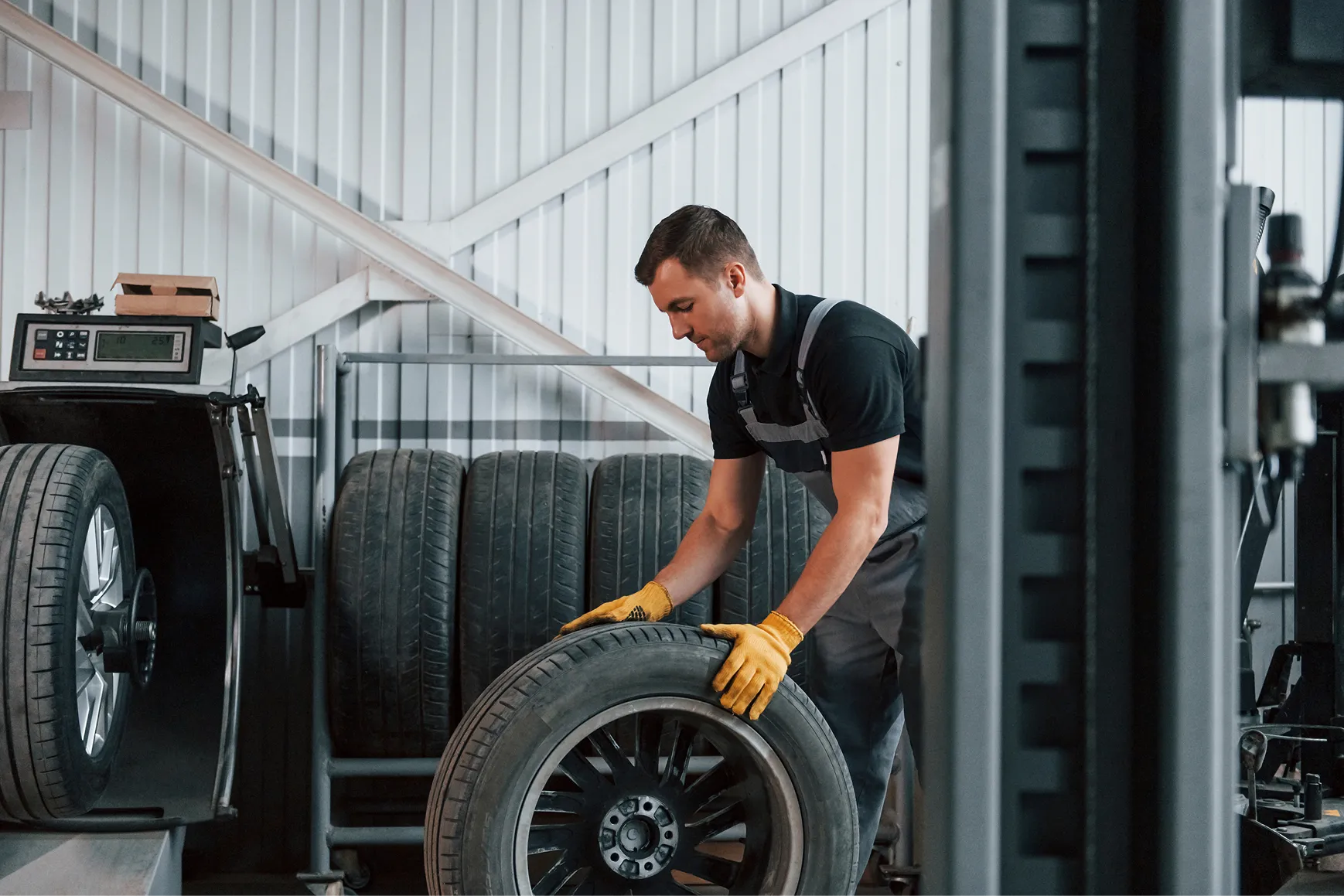
Get the feel and performance you want from your vehicle. Our tire services help reduce drift, quiet road noise, improve tread life, and keep dashboard warnings in check—so every trip feels consistent and responsive. We offer tire purchase and installations, balancing, alignments, rotations, tire repairs, and TPMS service, with expert guidance to match your goals for comfort, mileage, and handling.
Transmission Service
The transmission is the link between the engine and the wheels of your vehicle. Whether you drive a manual, automatic, or semi-automatic vehicle, the transmission plays a crucial role in the performance and reliability of your vehicle. The transmission keeps engine output matched with speed and load conditions. Because engines operate at high rotational speeds, the transmission reduces engine output speed and transmits torque through the differential, driveshaft, and wheels. As engine speed varies, the transmission switches between the gears that influence the amount of torque applied to the wheels. Transmission fluid performs a variety of duties, depending on the type of transmission. Transmission fluid acts as a cooling agent and protects the transmission by lubricating the internal gears and preventing corrosion and rust. In a manual transmission, clutches and gear shifts provide pressure and force—like engagement and disengagement—while in an automatic transmission, transmission fluid provides these same operational functions of force and pressure.
Wheel Alignment
A wheel alignment consists of adjusting the wheels of your vehicle so that all wheels are parallel to each other and perpendicular to the ground. Three basic angles contribute to proper wheel alignment: camber, caster, and toe. Camber is the measure of the degree of perpendicular offset from the road surface. Caster is the angle of your wheel’s pivot, which is attached to the suspension, and when this angle is out of alignment, straight-line tracking is affected. Toe refers to the angle of directional difference between the tire and the centerline of the vehicle. The front and rear wheels on your vehicle should always be perpendicular to the ground and parallel to the tire beside it. Routine wheel alignments have the potential to save you money in the long run while promoting optimal vehicle performance.
Wheel Services
Many of today’s wheels are cast or forged and made out of steel, aluminum, or aluminum alloy. Casting consists of pouring liquid metal into a mold, while forging consists of heating and machining a wheel into shape through the use of CNC lathing equipment. Anatomy-wise, the center section of a wheel contains a bolt pattern and mounting holes that are used to attach the wheel to a vehicle. The outermost lip of the wheel is known as the flange. The flange, located on the edge of the wheel, is flared to form the bead seat, which holds the tire and maintains an airtight seal. Safety humps are small elevations on the inside of the bead seat, which prevent the tire from falling into the drop center portion of the wheel in case a blowout occurs. This innovation allows drivers to maintain directional control of a vehicle with deflated tires. The drop center is the section of the wheel with a smaller diameter than the rest of the wheel. The drop center provides a means for installing and removing a tire. If you are looking for a one-stop wheel and rim shop, you have come to the right place. Our staff is comprised of wheel fitment and installation experts ready to help you find the perfect wheel.