

Auto Repair Hub
Request a quote or learn more about the type of repair services Clair & Dee’s can offer you
The Services We Offer
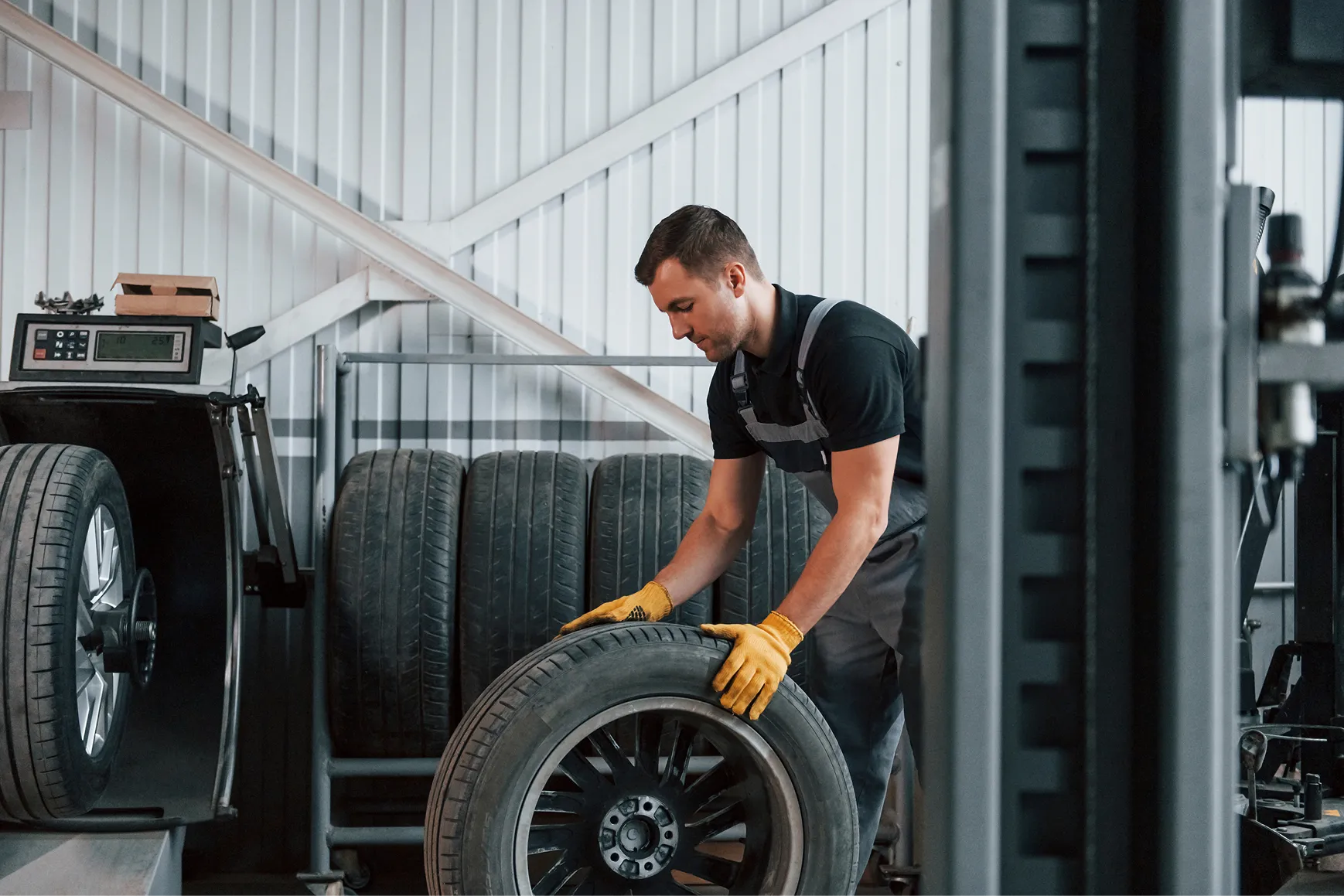
At Clair & Dee's Point S Tire & Auto, all repairs and maintenance are carried out by highly qualified and ASE certified mechanics using quality equipment to service a wide range of vehicles, including cars, trucks, SUVs, and mini-vans. Our team is committed to ensuring your vehicle performs at its best before leaving our shop.
Axle, CV Joint & Driveshaft Repair
Your vehicle’s axle, CV joint, and driveshaft components are integral to the performance and drivability of your vehicle...
Belts & Hoses
Your vehicle’s belts and hoses are involved in processes within the cooling system, air conditioning system, charging system, and engine...
Brake Repair
A fully functioning brake system is crucial to your safety, the safety of your passengers, and the safety of other drivers on the road. Your vehicle’s brake system involves highly engineered parts and precise movements that stop your vehicle by converting kinetic energy into thermal energy. When you press down on the brake pedal, the master cylinder pressurizes a system of hydraulic brake lines leading to each of the vehicle’s wheels, where brake pads or shoes press against a disc or drum and create the necessary friction needed to slow the vehicle to a complete stop. Over time, this friction and heat has the potential to wear down the brake shoes, brake pads, calipers, brake rotors, and other braking components. While the components comprising each brake system may vary, the warning signs for impending brake repairs are the same.
Climate Control Systems
A climate control system is a complex system that requires routine maintenance for increased seasonal performance and operation. A vehicle’s climate control system is comprised of multiple, smaller systems that work together to maintain a comfortable cabin environment. The climate control system is able to affect and regulate the internal temperature of a vehicle through a cycle of processes. Although the climate control system is primarily used to improve the comfort levels of both drivers and passengers, there are times over the course of the year when maintaining the ideal internal temperature becomes more than a matter of comfort. In severe weather conditions, maintaining the proper internal climate can actually factor into automotive safety. This is why it is important for you to seek climate control repairs at the first sign of trouble.
Cooling System Repair
Your vehicle's cooling system maintains optimal engine operating temperatures, preventing overheating. At Clair & Dee's Point S Tire & Auto, we specialize in cooling system diangostics and repairs to keep your vehicle roadworthy and your engine in peak condition. Serving Rexburg, ID; Blackfoot, ID; Driggs, ID; and surrounding areas, we are dedicated to keeping your vehicle running reliably.
Differential Repair
The differential is responsible for transferring engine power to the wheels. It also compensates for and adjusts to the differences in wheel speed as your vehicle moves through turns. When your vehicle navigates a turn, the inside wheel turns slower than the outside wheel, which has to turn faster in order to keep pace with the inside wheel. The differential allows the wheels to turn at different speeds while maintaining control. A vehicle without a differential would hop and bump along the pavement for an unstable, shaky ride. Four wheel drive vehicles are equipped with a differential in front and back, while rear wheel drive vehicles are equipped with a differential in back. A front wheel drive’s differential, called the transaxle because of the functional combination of the front axle and transmission, is located between the front wheels. All-wheel drive vehicles are equipped with a differential between both the front and rear wheels with a transfer case between them. The case adjusts for speed differences between the front and rear wheels. In all vehicle applications, the differential is primarily responsible for routing and regulating power between wheels.
Electrical and Electronic Systems
The electrical and electronic systems in your vehicle are responsible for routing power and information in order to dictate...
Engine Diagnostics and Performance
Every vehicle built since 1996 has been equipped with an On-Board Diagnostics System that monitors engine performance. Discrepancies in performance levels are reported through your vehicle’s computer system. Once the “check engine” or “service engine” light is displayed, your next step should be to seek out an engine diagnostic service or an engine tune-up. Engine diagnostics allow our staff to gather helpful information about the operating condition of your engine. The insights obtained during an engine diagnostic will determine the extent of suggested engine repairs. The most common diagnostic trouble codes are generated in response to malfunctions in the powertrain. Ultimately, regular engine tune-ups are necessary to optimize engine performance. A tune-up is also one of the most effective ways to prevent unexpected engine trouble. During an engine tune-up, our staff may replace the spark plugs, spark plug wires, air filter, fuel filter, and distributor cap and rotor in your vehicle. Our experts will also check emission levels, fuel lines, and belts and hoses. Engine diagnostics and regular engine tune-ups can help extend the life of your vehicle and improve the health of your engine.
Exhaust System Repair
Located on the underside of your vehicle, the exhaust system is responsible for collecting and directing harmful emissions away from the vehicle, reducing the amount of pollutants released into the environment, and minimizing engine exhaust noise and force. The exhaust system is composed of pipes and tubing designed to streamline vehicle operation while maximizing vehicle performance and efficiency. Engines produce dangerous gases as a byproduct of the combustion process. The exhaust manifold collects the emissions from the engine and funnels the gases through the front pipe to the catalytic converter. The converter transforms these harmful gases, like carbon monoxide, hydrocarbons, and nitrogen oxide, into less harmful ones, like oxygen, nitrogen, water vapor, and carbon dioxide. The muffler helps cancel out the noise created by the engine. The muffler dissipates sound waves while the tailpipe releases the converted gases into the atmosphere.