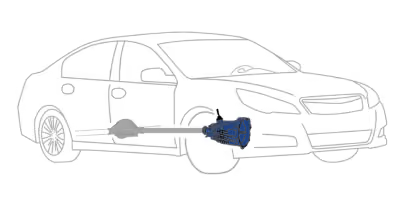
Transmission Service
Areas Served:
Rexburg, ID // Blackfoot, ID // Driggs, ID // and surrounding areas
Benefits of Transmission Service
A faulty transmission can negatively affect your vehicle’s performance. Symptoms of an impending transmission service include grinding gears, difficulty shifting, slipping out of gear, bucking, and hesitation. Even if your transmission is in neutral, excessive noise is a sign of transmission problems. In a manual transmission, a dragging clutch, or a clutch failing to disengage from the flywheel, is another sign of transmission issues. When this occurs, the clutch continues to spin with your vehicle’s engine, and a grinding noise will occur. A burning smell sifting through the air vents is a sign of burning transmission fluid and an overheating transmission. Things that can negatively impact the life of your transmission include extreme driving habits, and excessive loads or heavy towing habits. Because of the necessary pressure and force provided by transmission fluid in automatic transmissions, old, dirty, and unchanged transmission fluid can cause performance issues. Regular transmission maintenance as indicated by your vehicle’s manufacturer can help prevent transmission problems, but if you experience any of the above warning signs of transmission trouble, contact us today about transmission repair.
Clair & Dee's Point S Tire & Auto proudly serves the Transmission Service needs of customers in Rexburg, ID, Blackfoot, ID, Driggs, ID, and surrounding areas.
Clutch Adjustment and Inspection
In a manual transmission, the responsibility of the clutch is to engage and disengage the transmission from the engine. A clutch in a manual transmission allows the engine to continue turning even when the vehicle is stopped. In an automatic transmission, this process is regulated by the torque converter and transmission fluid. The clutch operates two shafts, one in the transmission and the other in the engine, and uses friction to keep the transmission connected to the engine. If the clutch is engaged, the pressure plate pushes against a flywheel and joins the transmission to the engine. If the clutch is disengaged, the pressure plate pulls away from the flywheel, separating the transmission from the engine. The clutch makes switching gears possible. Some transmissions use hydraulic clutches while others use cable clutches. In both cases, routine clutch maintenance is required to keep all moving components operating efficiently. If you are concerned about the functionality of your clutch, be sure to contact us about a service.
Approx Time:
60 Minutes
Clutch Replacement
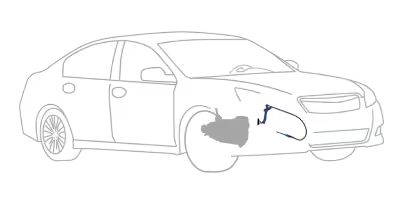
When a vehicle is running, the engine is always turning. The transmission connects to the engine and supplies power to the wheels, but this linkage cannot be constant, since a vehicle is not always moving. In a manual transmission, the clutch is used to engage and disengage the transmission and the engine. The clutch operates two shafts: one shaft connects to the transmission and the other connects to the engine. Clutches use friction to keep the transmission connected to the engine. When the clutch is disengaged, the pressure plate pulls away from the flywheel and separates the transmission from the engine. When the clutch is engaged, a pressure plate pushes against a flywheel and joins the transmission to the engine. In a manual transmission, a clutch allows your engine to continue spinning even when the vehicle is stopped. Switching between gears in a vehicle with a manual transmission is made possible by operating the clutch.
Approx Time:
360 Minutes
Transmission Replacement
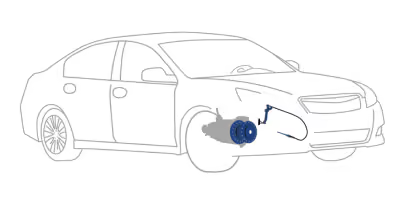
Whether your vehicle has an automatic or manual transmission, the responsibility of the transmission remains the same: route power from the engine to the drive wheels. Essentially, the transmission converts the RPMs of the engine into torque, which is transferred to the drive wheels of the vehicle. The transmission switches between a range of speeds by shifting gears as a vehicle speeds up and slows down. Transmission fluid acts as a cooling agent. This fluid lubricates the internal gears and prevents corrosion and rust while the transmission filter helps to remove contaminants from the fluid. The components inside manual and automatic transmissions may differ, but routine maintenance is all about keeping internal components moving and operating as they should. When the life of your transmission comes to an end, our service staff will replace your manual or automatic transmission with a quality aftermarket transmission that matches or exceeds the performance standards of the originally equipped transmission.
Approx Time:
Call for estimate